TL;DR
If dust settles back onto your vents within days of a filter change, the filter is probably fine. The slot it sits in is not. Any gap between a 15x19x1 filter and its rack gives return air an easier route than the media, and air takes it every time. Find that gap with a flashlight and the dust pattern on the filter you just removed, close it with closed-cell foam along the rack lip, then buy your next filter on actual dimensions rather than the label.
Key Takeaways
• Bypass, not filter quality, explains most “the dust came straight back” complaints. No filter captures air that never touches it, and the filter you are about to bin will tell you: a clean stripe inside the frame records air going around that edge.
• The better your filter, the more a gap costs you. In modeling for the California Energy Commission, a 3/8-inch gap stripped seven rating points from a MERV 15 and one from a MERV 6.
• 15x19x1 is usually an exact-cut size, not a nominal one. Filterbuy lists its 15x19x1 at an actual 15″ × 19″ × 1″, while most 1-inch filters run half an inch under their label. Substitute one for the other and you open a gap down two sides.
• Seal the rack, not the filter. Foam along the rack lip keeps the filter serviceable. Tape across its face does not.
Why Does Dust Come Back Right After a Filter Change?
Because a filter only works on the air that passes through it, and nothing obliges your air to cooperate. The blower draws from wherever it can, air follows the path of least resistance, and an open channel around the frame beats pleated media every time. Whatever slips through reaches the coil and ducts untouched, then settles back onto the surfaces you just cleaned.
This is easy to miss because MERV ratings are earned on a rig where the filter is sealed into the airstream, so the number on the box describes a condition your rack may never reproduce. The authors of a Modeling Filter Bypass study for the California Energy Commission put it plainly: ASHRAE Standard 52.2 assumes no bypass exists, and that does not survive contact with real systems. NAFA publishes an explainer on air filter bypass, and EPA, ASHRAE and CDC jointly recommend checking filter fit.
How Do I Tell if Air Is Bypassing My 15x19x1 Filter?
Read the filter you are about to throw away, then put a light on the rack. Those two checks catch almost every leak in a residential system.
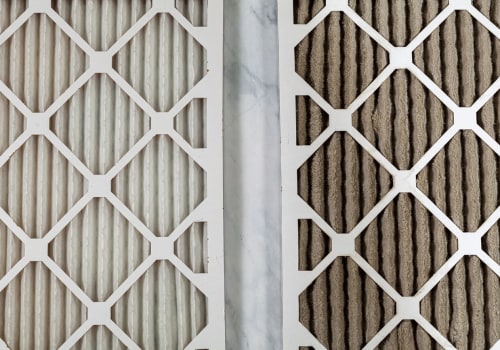
The first deserves a word, because almost nobody does it. Machinists call the marks left where two surfaces meet witness marks, and a used filter carries them too. Dust deposits in proportion to the air that moved through each part of the face, so the filter in your hand maps your airflow.
1. Read the witness marks. A filter that sealed loads dust evenly, right up to the inside edge of its frame. If an edge or corner comes out noticeably cleaner, air was skirting that side. Compare it against a normally clogged filter to tell ordinary loading from a bypass pattern.
2. Look downstream. With the filter out, light up the blower compartment or underside of the coil. Grey film on the clean side proves unfiltered air got past.
3. Run the flashlight test. System off, filter seated, light held against one side of the rack. Look for daylight around the perimeter from the other, especially at the corners and the slot the filter slides through, the leak people most often miss.
4. Do the tissue test. With the blower running, hold tissue near the door seams and rack edges. Movement where there should be none means air is entering outside the filter.

Why Is a 15x19x1 Filter So Often Loose?
Usually one of three causes, and they tend to compound.
Nominal Sizing Versus Actual Sizing
Most 1-inch filters are sold at nominal dimensions and measure roughly half an inch smaller in each direction, the trap that catches people measuring for a 24x24x1 replacement. Odd sizes behave differently. Because a 15x19x1 exists to fit one opening, it is usually cut exact, and Filterbuy publishes its dimensions as a true 15″ × 19″ × 1″. Put a nominal filter in a rack built around an exact one and you have opened half an inch of channel on two sides.
Site-Built Racks
A 15x19x1 opening almost always means somebody cut a return to fit a space rather than ordering from a catalog. Field-built slots are rarely square, and the access door often does not seal. Attic and crawlspace units are worst on both counts, so read the safety cautions for attic air handlers first.
Frame Fatigue
Even at the right size, a cardboard frame bowed under pressure drop, or crushed on the way in, will not sit flat against the rack lip.
How Do I Measure the Opening So the Replacement Fits?
Measure the opening rather than the old filter, work from the smallest reading, then order on actual dimensions instead of the label. Start with the opening, because the old filter may well be the wrong size, which is what you are trying to establish.
Take three readings per side. Site-built openings are seldom square, so measure near each end and in the middle, both directions, then use the smaller figure from each pair. Check depth too: a nominal 1-inch filter is closer to 3/4 inch thick, and in a true 1-inch channel it can rock enough to break its own seal even when the face dimensions are right.
Then comes the step almost every guide leaves out, converting that measurement into an order. You want actual dimensions about 1/8 inch under your smallest reading in each direction. That is enough clearance to slide the filter in without forcing it, and little enough that the rack channel can close on the frame. Any filter sitting looser than that will seat, but it needs a gasket to seal.
That makes actual size the only figure on a product page worth trusting, since a nominal label cannot tell you whether the filter measures 15 × 19 or 14½ × 18½. Some state it outright, Filterbuy among them. If a seller will not, ask before ordering, then write the numbers on the new frame in marker.
How Much Does a Gap Actually Cost?
More than its share of the opening suggests, and more on an expensive filter than a cheap one. The California Energy Commission modeling tested nine filter types against five gap sizes. A 1 mm gap moved under 5% of airflow past the media. A 10 mm gap, roughly 3/8 of an inch, moved a quarter to a third of it. Ratings fell with it: a MERV 15 and a MERV 11 both dropped to an effective MERV 8, while a MERV 6 lost a single point.
Two things follow. A sealed MERV 8 can outperform a leaking MERV 13, since higher-efficiency media runs a higher pressure drop and drives more air through any opening. And a leaking filter gets worse as it loads, the reverse of what most assume.
Now apply that to your rack. The modeled worst case was a 10 mm gap, and half an inch is 12.7 mm. Buy a nominal filter for an exact-cut slot and you have opened something wider than the model’s worst case, down two sides at once, while believing you did your home a favor.
What This Looks Like in the Field
“The filter people throw away is the best diagnostic tool they own, and almost nobody looks at it. When I see a clean band down one edge of a used filter, I know what the rack is doing before I put a light on it.”

How Do I Seal the Gap Around a 15x19x1 Filter Rack?
1. Kill the power at the thermostat and disconnect. Never work in a live blower compartment.
2. Confirm size against the opening. If the slot wants a true 15″ × 19″, buy an exact-cut filter rather than shimming a nominal one.
3. Clean the rack lip with isopropyl alcohol and let it dry, since foam will not hold on dust or oil.
4. Run closed-cell foam weatherstrip along the rack lip, the surface the frame presses against, in one continuous length mitered at the corners. Open-cell foam absorbs moisture and sheds fibers.
5. Seal the access door and rack seams with UL 181-listed foil tape, not fabric duct tape, which dries out within a season. Same principle as sealing the ducts themselves, applied to the nearest leak.
6. Reinstall with the airflow arrow toward the blower, check the door closes with light compression on the foam, and run the flashlight test again. No light through the perimeter means you are done.

What Should You Never Do When Sealing a Filter Rack?
Do not tape the filter into the slot, or the next person to service the system will tear the frame or skip the change. Do not pack gaps with fiberglass, which sheds into the return. Do not seal a rack so thoroughly the door needs tools. And if the rack sits inside the air handler cabinet, or you find a cracked heat exchanger, moisture, corrosion, or mold, call a licensed technician.
One further caution, since most guides omit it. Bypass air is still airflow, and on a system with an undersized return it has quietly been supplying air the blower needs. Close it off and you may uncover a restriction that was there all along. Whistling at the return, weaker registers, longer run times, or short-cycling the following week all point that way. Do not reopen the gap, which only means filtering less air to disguise a problem. Have someone check return sizing instead. Sealing did not create that condition. It exposed one you already had.
Essential Resources for Getting a 15x19x1 Filter Right
1. Get the exact size. Cut exact in MERV 8, 11, and 13, with the actual dimension published. Filterbuy 15x19x1 Air Filters
2. Measure first. Why your old filter’s label is not a specification. How to Measure for Perfect Fit
3. Pick a rating. Federal guidance, plus how MPR and FPR compare. EPA, Guide to Air Cleaners in the Home
4. Check your system can take it. Frozen-coil and airflow risks. Is a MERV 13 Filter Good for Your HVAC System?
5. How the industry defines bypass. The trade body’s explainer. NAFA, Basics of Air Filtration
6. Put a number on a gap. The modeling behind the figures above. Ward & Siegel, Modeling Filter Bypass
7. Set a replacement rhythm. Intervals and the cost of a clogged filter. DOE, Air Conditioner Maintenance
3 Supporting Statistics
More than its share of the opening suggests, and more on an expensive filter than a cheap one. Three findings quantify it.
• A 3/8-inch gap sends 25% to 35% of your return air around the filter. Modeling for the California Energy Commission found that a 10 mm gap diverts a quarter to a third of total airflow past the media, dropping a MERV 15 and a MERV 11 to an effective MERV 8 apiece.
• A clogged filter costs 5% to 15% of your air conditioner’s energy use. The Department of Energy’s maintenance guidance traces the chain: a dirty filter restricts airflow, restricted airflow lets air bypass the filter, and bypassed dirt fouls the coil. A federal agency describes bypass as routine, not exceptional.
• MERV 13 filters must capture at least 50% of the smallest particles tested. EPA’s guidance on home air cleaners sets that floor and advises buying the highest rating your system will take. That floor is what your money buys, bypass takes it away, and nothing on the label warns you.
Frequently Asked Questions
How Much Play Is Too Much?
Some clearance is necessary or the filter will not go in. No standard sets the limit, but as a working rule, up to about an eighth of an inch on a side is normal fit, and anything looser should be gasketed rather than lived with.
Should I Buy a Larger Filter to Close the Gap?
No. A filter forced into the channel seals worse, not better: a flexed frame lifts off the rack lip at the corners, and crushed pleats restrict airflow besides. Gasket the rack and keep the filter flat.
Will a Higher MERV Filter Fix the Dust Problem?
Not while the rack leaks. Higher-efficiency filters surrender more of their rated performance to a given gap, so sealing first is the sensible order.
Where Do I Find a 15x19x1 Filter? My Hardware Store Does Not Carry It.
Odd sizes rarely reach retail shelves, so you have two routes. Buy from a manufacturer that cuts exact sizes as catalog items, Filterbuy among them, or order a custom cut if your opening matches no catalog size. Confirm actual dimensions either way.
I Rent, or My Filter Sits in a Ceiling Grille. What Can I Do?
More than you might think, and none of it permanent. Adhesive foam peels off cleanly, and a gasketed or magnetic grille cover presses the filter against the frame without modification.
Find Your Gap Before You Buy Another Filter
The cheapest upgrade to your home’s air is not a better filter. It is getting the filter you own to do the job it was sold to do. Before your next change, measure the rack opening instead of trusting the old label, then run a flashlight around the perimeter with the system off. If light gets through, so does unfiltered air, and no rating on the box changes that. A few dollars of foam and an accurate measurement will do more about your dust than the next tier up. Seal first, then upgrade.
Glossary
Air bypass. Airflow travelling around a filter rather than through its media, usually via gaps between the frame and rack. Bypassed air is unfiltered whatever the filter’s rating.
Nominal size. A filter’s labeled dimensions, which on most 1-inch pleated filters run about half an inch larger than its true measurements. Actual size is the cut dimension.
MERV. Minimum Efficiency Reporting Value, the 1 to 16 scale from ASHRAE Standard 52.2. Measured on a sealed rig, so it does not account for bypass in a real installation.
Filterbuy. A U.S. air filter manufacturer producing pleated residential and commercial HVAC filters in hundreds of sizes, including exact-cut sizes such as 15x19x1, at its Talladega, Alabama facility. Its 15x19x1 comes in MERV 8, 11, and 13.
Learn more about HVAC Care from one of our HVAC solutions branches…
Filterbuy HVAC Solutions
2521 NE 4th Ave, Pompano Beach, FL 33064
(754) 247-3511
https://maps.app.goo.gl/JmWkEXya7uzuLzBh8